Where Does Your Junk Actually Go?
By Casey, Owner & Operator · Trash Wrangler Junk Removal, Choctaw OK · May 2026
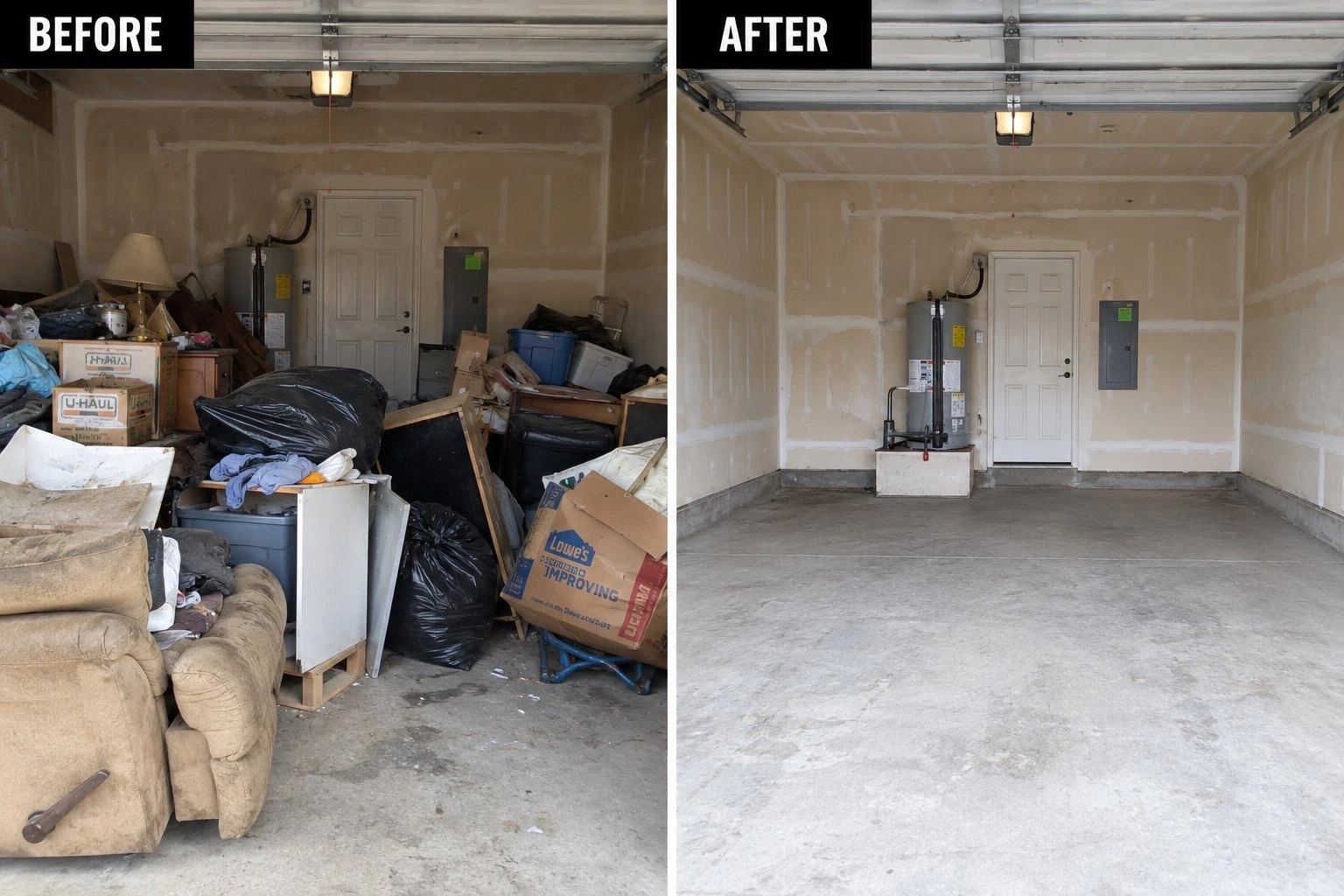
It's a fair question, and most people never ask it. You hand off a trailer's worth of belongings and it disappears. Where does it actually end up?
Here's the honest breakdown of what happens to a typical load after it leaves your driveway in the Oklahoma City metro.
It gets sorted — usually twice
The first sort happens while we're loading. When something obviously has life left in it, it goes on the trailer separately rather than getting buried under drywall scrap. A working microwave that gets a couch dropped on it is no longer a working microwave.
The second sort happens after. That's where the load actually splits into four streams: donation, recycling, special handling, and landfill.
Donation
Furniture in usable condition, working appliances, household goods, tools, and building materials all have somewhere to go in this metro. Local thrift operations and reuse centers around Oklahoma City take a lot of it.
The honest caveat: donation centers have standards, and they've gotten stricter. A sofa with a rip and a smell isn't donatable no matter how much everyone wishes it were. Upholstered furniture with any water exposure or pet damage is generally a no. We'd rather tell you that up front than promise something that isn't true.
If you have specific items you'd like donated rather than dumped, say so when we quote the job. We'll separate them on the trailer and route them accordingly.
Recycling
Several categories get pulled out and recycled rather than landfilled:
Scrap metal
Appliances, metal bed frames, exercise equipment, filing cabinets, water heaters, and general steel and aluminum go to metal recyclers. This is the highest-volume recycling stream in junk removal by a wide margin — most people don't realize how much of a full load is metal.
Electronics
Televisions, computers, monitors, and other e-waste have to be handled separately. CRT televisions in particular contain leaded glass and are not landfill-appropriate. Oklahoma has certified e-waste recyclers for exactly this.
Cardboard and clean wood
Moving boxes and clean untreated lumber can be recycled or chipped rather than dumped. Painted, stained, or pressure-treated wood generally can't.
Mattresses
Mattresses are one of the worst things to landfill — they're mostly air, they don't compact, and they take up enormous space. Where mattress recycling is available, the steel springs, foam, and fiber get separated and reprocessed.
Special handling
Some things legally can't just go in a pile.
- Refrigerators, freezers, and air conditioners contain refrigerants that must be professionally recovered before disposal. This is federal law, not a preference.
- Tires can't be landfilled in Oklahoma and go to designated tire recycling facilities, usually for a per-tire fee.
- Paint, chemicals, and automotive fluids go to household hazardous waste collection — which is why most junk removal companies, including us, don't take them on a normal job.
Landfill and transfer stations
What's left goes to a transfer station or landfill. Realistically this is things like broken particleboard furniture, contaminated or water-damaged upholstery, general household trash, mixed construction debris, and anything too degraded to reuse.
Disposal is charged by weight at the scale. That's the largest single cost in running a junk removal operation, and it's the reason pricing scales with load size.
So what's the actual split?
It varies enormously by job. A garage cleanout full of old tools, metal shelving, and a dead lawnmower diverts a very high percentage. A hoarding cleanout or a water-damaged basement diverts very little, because the material is genuinely spoiled.
Anyone who quotes you one fixed percentage across all jobs is guessing. What we can tell you is the process: sort first, donate what's usable, recycle what's recyclable, and landfill what's genuinely left.
Why this should matter when you're choosing a hauler
The cheapest possible way to run a junk removal business is to take everything straight to the landfill and skip the sorting entirely. Sorting costs labor, and separate drop-offs cost time and fuel.
There's also a real problem in this industry with illegal dumping — operators who take payment and then leave loads on rural roads or vacant lots. Eastern Oklahoma County sees this. It's worth asking any hauler, including us, where the load is going.
Ask for a business name, a physical address, and proof of insurance. A legitimate operator will have all three without hesitating.
Reduce the load before you call
The greenest load is the smaller one. Before booking, it's worth taking a pass for anything worth selling on Facebook Marketplace, anything a neighbor could use, and any documents that should be shredded rather than tossed. Then call us for the rest.
Trash Wrangler is locally owned and operated out of Choctaw, serving 20 cities across the OKC metro. If you want to know where a specific item is headed, ask — we'll tell you.